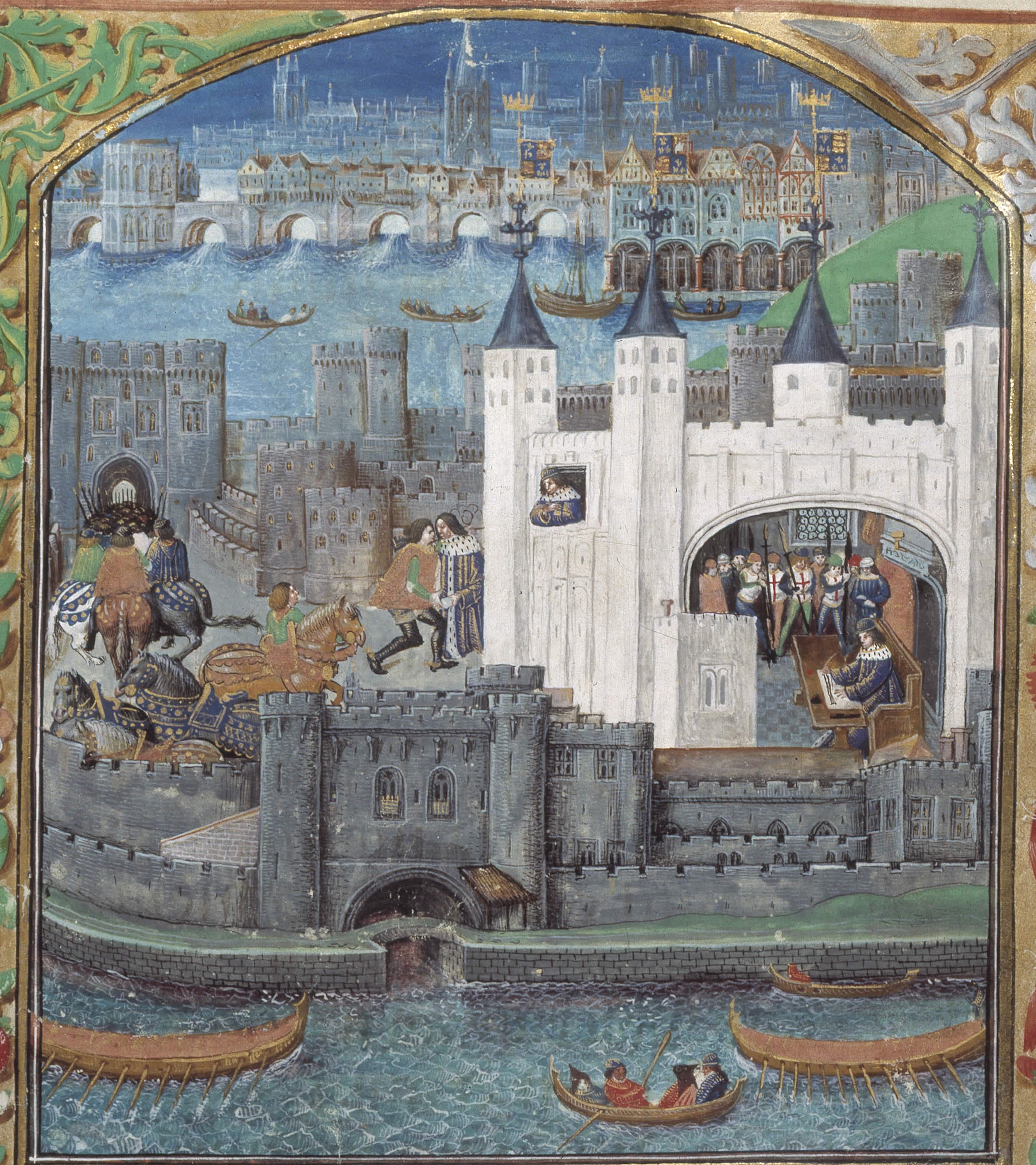

I am moving house to the City of London, which is not the same things as the city called London. Once upon a time, a thousand years ago, there was a walled city on the north bank of the Thames. It was about one mile square, and the gates were closed every night at dusk, and not opened till dawn the next day. It’s that little bit, right in the middle of London, that’s is still referred to as the City, which a capital C.
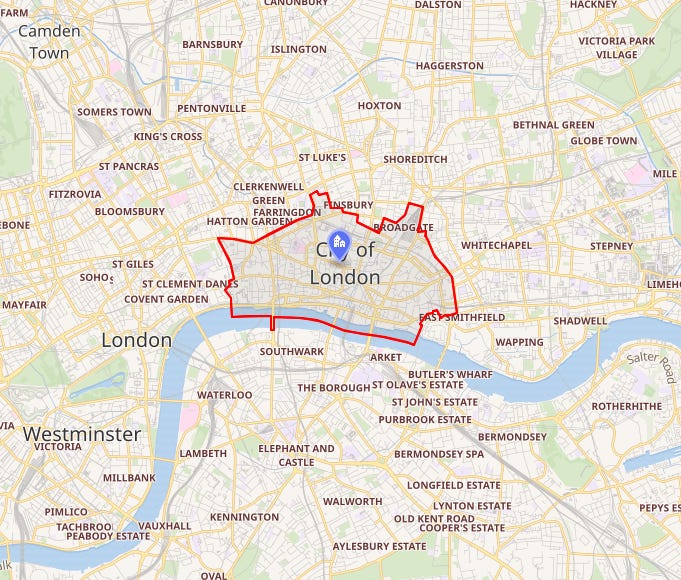
The walls fell down long ago, although you can still see bits of ruined rampart here and there. The Square Mile, as it is often called, is now the financial centre of London, brimming with banks and law firms. But the old street plan is almost unchanged from medieval times, and there are still an awful lot of churches.
There are fifty of them (including some ruins), which is an awful lot for one square mile. It’s impossible, within the City of London, to be more than 250 metres from the nearest church, and usually it’s much, much less. My new flat will have six churches, ruined or otherwise, within that distance.
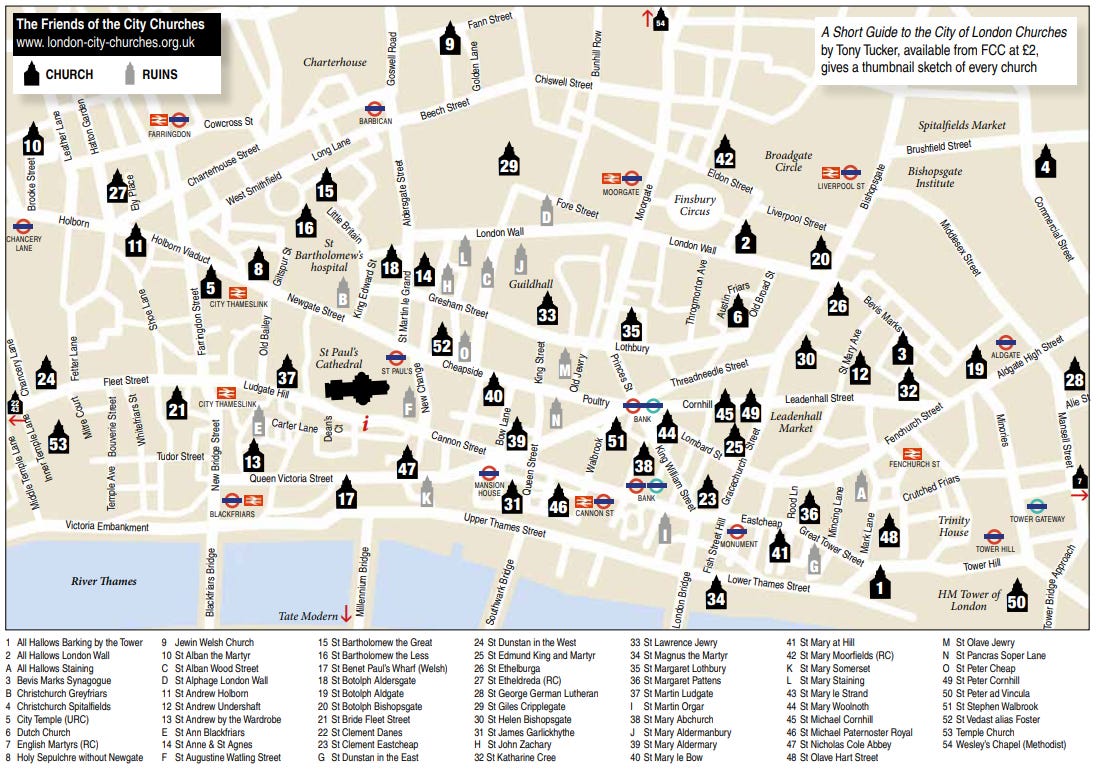
And there used to be more. Before the Great Fire of London in 1666, there were 110 churches in the Square Mile, they just couldn’t be bothered to rebuild them all.
All of this may lead you to marvel at how high church attendance must have been in Medieval times. Imagine filling all those churches every Sunday. The people must have been so pious, so penitent, and so prayerful.
This is not the case at all. Medieval Londoners didn’t go to church much.
They just liked the fact that churches were there.
I shall quote Professor Paul Strohm writing about London in the late fourteenth century, partly because you might not believe me, and partly because he was my tutor at Oxford, many moons ago.
Most thoroughly believing Christians confessed, at most, once a year, and rarely sat through a whole Mass. Mass was performed at least once a day, and usually more often in the parish church, always at first light and usually in late afternoon or Vespers, and parishioners were undoubtedly happy to know that it was being punctually observed without feeling particularly obliged to attend.
Medieval religion was remarkably communal. A modern fellow, if he wonders at all, will wonder “Does God like me? Have I pleased Him? Or have I done something wrong?”
But a Medieval Londoner was more likely to wonder “Does God like us? Have we pleased him? Or have we done something wrong?”
The proverbial buck doesn’t stop with me, it stops with us.
This makes quite a bit of sense in relation to the Bible. God was always smiting whole cities, rather than individuals. Sodom and Gomorrah, Babylon were smitten because the cities were guilty as a whole.
So a medieval Londoner might have thought like this:
We Londoners wanted to keep God happy. What does God like? He likes services being offered in His praise. So what do we do? We build a lot of churches (at great expense) and then we pay a lot of pious priests and monks who’ve learnt their Latin to say services in those churches (at great expense). And once that was done we are home free.
We might pop into the church, have a look at the host, listen to a psalm or so, and then go off about our business, secure in the knowledge that religion was being done in London, even if it’s not me personally, that’s doing it.
In terms of what God didn’t like us doing, one of the big ones was heresy. So we Londoners mustn’t be heretics. It’s easy for us to think of Medieval heresy hunts as being Us vs Them. But it was much more Us vs Us. We must remain free of heresy, because if we have heretics among us, God will punish us.
It’s the sort of distinction that wouldn’t be much comfort to the chap being burned at the stake. But it does make it different.
We must keep ourselves pure, because if one of us is a sinner, and we tolerate it, then we are all guilty. We must purge ourselves.
This isn’t the way that most modern people feel about things. I don’t expect God to punish me because my next door neighbour is a rotter.
It seems to me that the same Medieval feeling of communal piety and communal guilt now affects an awful lot of the big businesses. Every few weeks, there’ll be a news story about some chap who’s lost his job because he told a dirty joke on Facebook, or said something rude on Twitter, often under a pseudonym.
The company that fires him will immediately apologise, and then announce that the dirty joke does not align with our values here at Universal Exports. It doesn’t matter to them that the chap told his dirty joke in his free time on a Sunday afternoon. Nor does it matter that he worked in accounts or logistics or some other bit of the company which could not possibly be subject to politics.
Universal Exports, it turns out, will behave just like medieval Londoners. They have an idea of our communal virtue, and of our communal guilt.
The church bells chime, the services are still said. But the sense of communal guilt has moved to the corporations next door. They are the new city states, which will be smitten by God, or social or media, or maybe both, if they do not purge themselves. There are fewer burnings now, and more P45s. But it is good to know, as a Londoner, a true Londoner of the City of London, that God’s work is being done, even if I can’t be bothered to do it myself.